Kinetin – Plant Growth Regulator
Kinetin is a synthetic cytokinin used in plant tissue culture to support cell division, shoot induction, and plant development. It is commonly added to culture media, including Murashige and Skoog (MS) medium, in combination with auxins for research applications.
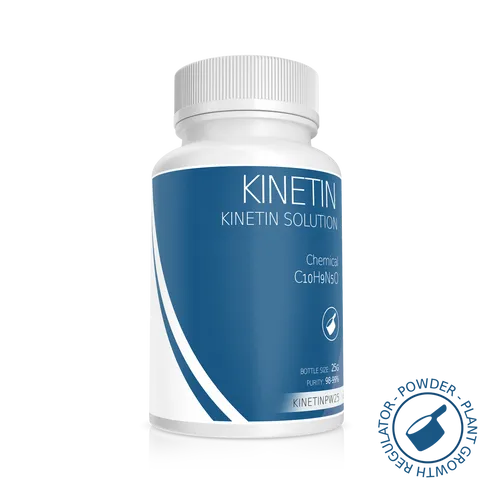
Product Overview
Kinetin, also known as 6-furfurylaminopurine, is a synthetic plant cytokinin that influences cell division and developmental processes. In plant tissue culture, it is used as a component of growth media to help regulate shoot formation and tissue development.
Kinetin is commonly used with auxins to adjust the hormonal balance of plant culture media. The response depends on the plant species, tissue type, culture conditions, and concentrations of the growth regulators used.
Plant tissue culture research, shoot induction, cell division studies, and plant growth regulator investigations.
Availability: 24/48H for stock items; 2–6 weeks for non-stock items.
Key Features & Benefits
Supports Cell Division
A cytokinin used to regulate cell division and developmental responses in plant tissue culture systems.
Shoot Induction
Used in suitable culture conditions to support shoot initiation and proliferation.
Compatible with Culture Media
Can be incorporated into plant tissue culture media, including MS medium, according to the experimental protocol.
Research Applications
Suitable for plant biotechnology, in vitro propagation, and plant developmental research.
What Is Kinetin?
Kinetin is a member of the cytokinin group of plant growth regulators. Cytokinins participate in several plant processes, including cell division, shoot development, and the regulation of leaf senescence. In vitro, kinetin can be used to influence the development of plant tissues under controlled culture conditions.
Plant tissue culture protocols often combine cytokinins with auxins to influence the formation of shoots, roots, or callus. The appropriate concentration and ratio depend on the species and explant, so optimization may be necessary for each experimental system.
Applications of Kinetin in Plant Tissue Culture
Shoot Induction and Proliferation
Kinetin may support shoot formation and multiplication when used at appropriate concentrations in a suitable culture medium.
Callus Development
In combination with auxins, kinetin can help regulate callus development and subsequent tissue differentiation in selected plant systems.
Plant Development Research
Used to investigate cytokinin responses, hormonal interactions, and plant tissue development under controlled conditions.
Kinetin Preparation for Plant Tissue Culture Media
Kinetin powder can be incorporated into plant tissue culture workflows using an appropriate stock solution and a compatible basal medium. The following is a general overview based on the supplied product information; use a validated laboratory protocol for the plant species and culture system under investigation.
1. Prepare the Basal Medium
Prepare the selected plant tissue culture medium, such as Murashige and Skoog (MS) medium or another suitable formulation, according to its preparation instructions.
2. Add the Required Components
Add the required carbohydrate source, gelling agent when preparing solid medium, and other validated supplements. The supplied protocol gives 30 g/L sugar, 1 mL/L PPM, and either 3–4 g/L gellan gum or 6–8 g/L agar as general examples; verify compatibility with the selected formulation.
3. Incorporate Kinetin
Add the required quantity of kinetin using a suitably prepared stock solution. Select the final concentration according to the validated plant tissue culture protocol and the intended developmental response.
4. Sterilize and Prepare for Use
The supplied protocol describes autoclaving the medium at 121°C and 15 psi for 20 minutes. Confirm that all ingredients are compatible with this sterilization method; heat-sensitive supplements may require separate sterilization and addition under appropriate aseptic conditions.
Solubility and Handling
Kinetin is described as very slightly soluble in water and soluble in sodium hydroxide (NaOH) or potassium hydroxide (KOH). Select a suitable stock-solution preparation method and confirm the final solution's compatibility with the intended culture medium.
Follow the product documentation and applicable laboratory safety procedures when handling the powder and preparing solutions.
Technical Specifications
| Specification | Details |
| Product Name | Kinetin |
| Catalog Number | 0644-CN-K001-25GM |
| Product Size | 25 g |
| CAS Number | 525-79-1 |
| Synonyms | 6-Furfurylaminopurine |
| Molecular Formula | C10H9N5O |
| Molecular Weight | 215.2 g/mol |
| Appearance | White to yellow powder |
| Solubility | Very slightly soluble in water; soluble in NaOH or KOH |
| Storage Temperature | 2–8°C |
| Shelf Life | 3 years from the manufacturing date |
| HS Code | 2934.99 |
| Dry Ice Required | No |
| Hazardous Shipping Classification | No, according to the supplied product listing. Consult the applicable safety data sheet for handling and shipping requirements. |
Storage, Shelf Life & Quality
Store Kinetin at 2–8°C according to the supplied product specifications. The listed shelf life is three years from the manufacturing date.
The product is listed as passing its specified suitability criteria. Refer to the manufacturer's documentation for the applicable quality-control tests, acceptance criteria, and batch-specific information.
Research Use
Kinetin is intended for laboratory and plant tissue culture research applications. Use the product according to the manufacturer's instructions and applicable laboratory safety procedures.
Support Your Plant Tissue Culture Research with Kinetin
Explore Kinetin, catalog 0644-CN-K001-25GM, a cytokinin for plant tissue culture media, shoot induction studies, and plant development research.
Login for Price Request PricingAvailability: 24/48H for stock items; 2–6 weeks for non-stock items.